咨询与报价
EN
At KnownPCB, with plentiful printed circuit board (PCB) manufacturing experience since 2008, we always focus on resolving thermal challenges in high-power and high-density circuit board design. In this article we want to make clear:
An embedded copper coin PCB (also called copper block PCB or copper inlay PCB) is a circuit board that uses a solid copper insert inside the board to create a more efficient thermal path, allowing heat to be efficiently transferred from high-power components to the rest of the PCB or external cooling structures.
The technology of embedded copper board structure is not a general cooling method. It is a potently approach that is used to handle specific thermal bottlenecks.
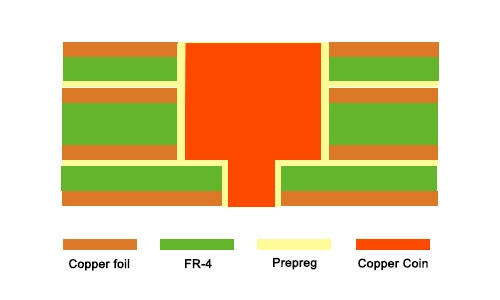
To understand what kind of thermal barriers that a PCB with copper coin insertion is designed to overcome, it is helpful to compare the performance of different thermal managements first (Thermal vias and Heatsinks) under real world design restrictions.
Comparison Dimension | Embedded Copper Coin PCB | Thermal Vias | Heat Sink |
Heat Dissipation Requirement | Solid copper inserts(≈400 W/m·K), reduces Tj by 15–30°C. | Limited by copper plating thickness; high thermal resistance. | Depends on surface area (A) and heat transfer coefficient (h). |
Power Density | > 10W per component, ideal for high-heat flux (SiC, IGBT, MOSFETs). | 1W – 10W per component. Best for low-power MCUs or linear regulators. | System-level cooling. Scalable for high-power modules and clusters. |
Space Efficiency | Integrated into PCB; supports BGA/LGA density. | Consumes routing layers, affects Signal Integrity (SI). | Increases bulk/weight; requires airflow clearance. |
Cost Control | Significantly increases board cost due to specialized cycles. | Lowest cost per board; standard mass production. | Moderate BOM cost + assembly labor + long-term maintenance. |
Reliability and Integration | Offers high-current carrying capacity (low-impedance PDN) and mechanical reinforcement, enhancing vibration resistance. | Only provides thermal function; no electrical or structural enhancement. | There is a high probability of fan failure, dust, and TIM degradation over time. |
In high-power PCB design, these 3 solutions for thermal management are often used in combination rather than separately. Thermal vias provide the basic heat path through the board, and heatsinks handle the overall system cooling.
However, When Z-axis space is limited and standard paths become inefficient, embedded copper board is becoming a more optimal choice for the following applications.
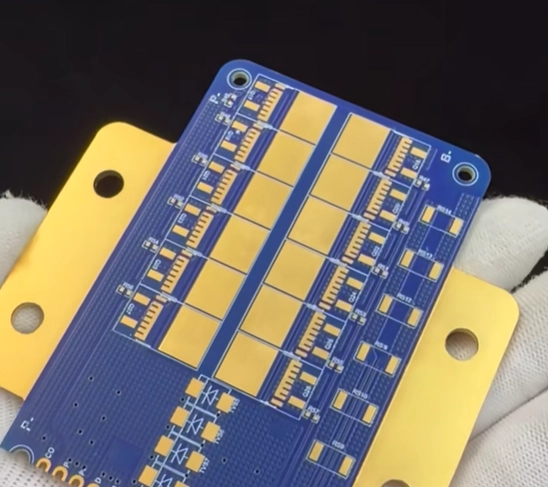
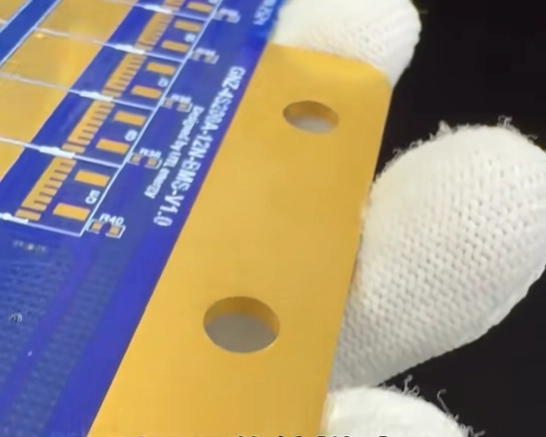
High-power and high-density PCBs with embedded copper technology are ideal for industries facing severe thermal challenges and space constraints. Key applications include:
In these application challenges, the core issue is consistent: concentrated heat builds up at a localized source, and standard cooling techniques are no longer sufficient. Embedded copper coins address this by establishing a more direct and optimized thermal path within the PCB structure.
However, the way that insert copper coin inside PCB also requires careful consideration:
Thus, for lower-power PCB designs, simpler thermal solutions such as thermal vias or heatsinks are usually more practical.
Conclusion
Embedded copper coin PCBs are not a all-purpose heat mitigation technique, but a specialized thermal solution to resolving localized thermal bottlenecks in PCB design.
As shown in context above, embedded copper coin offers a more direct and lower-resistance pathway to extract heat from the source, improving overall thermal performance and reliability. Instead of replacing other borad thermal design, PCBs which have embedded copper sturcture are most superior when combined as part of a complete PCB heat management design, and giving designers more flexibility in selecting the right PCB solution for their ciruit board.
 | 下载我们的设计指南为了更好的PCB设计和制造 这些是设计师和工程师下载次数最多的设计指南:
|
经7个行业、4000多个客户项目验证
请通过 sales@knownpcb.com 联系我们,或在此处申请工程支持,或使用下方表格联系 KnownPCB。 | 立即咨询 |